
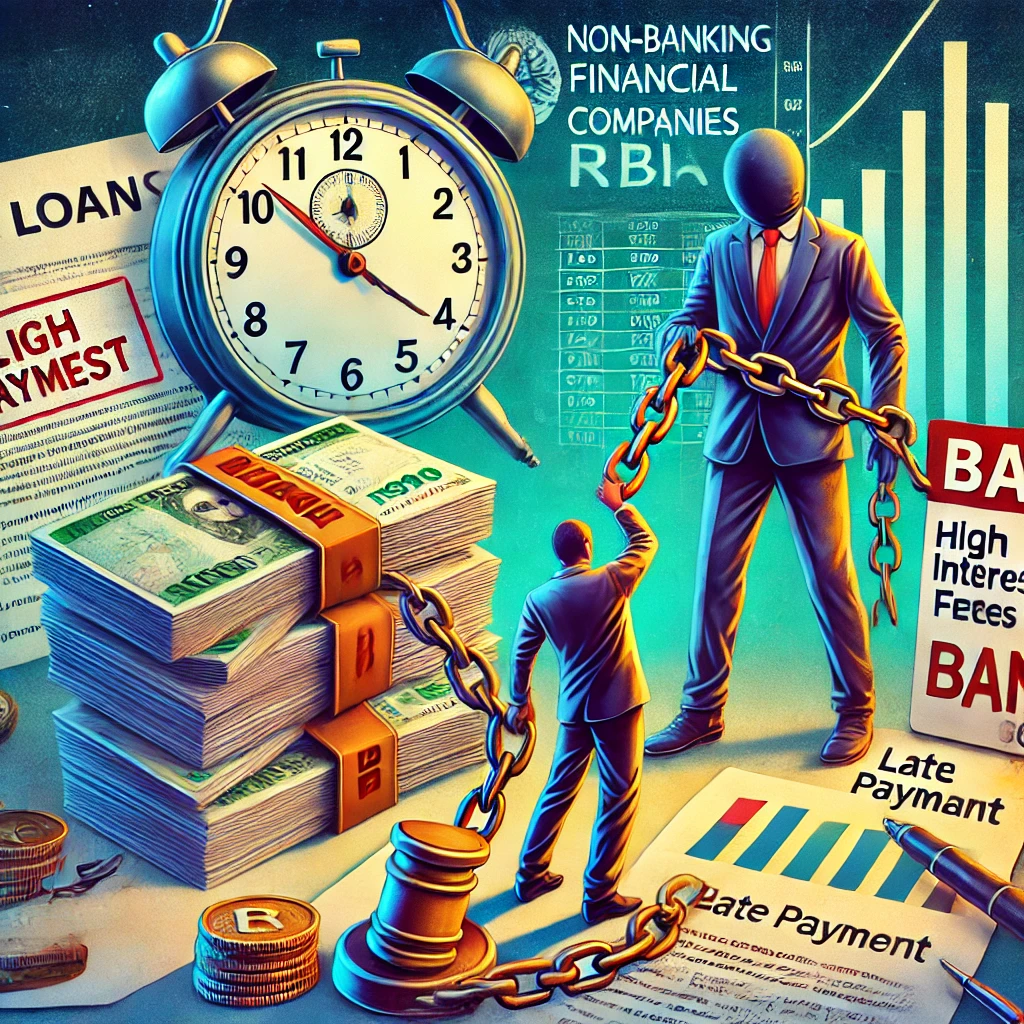
Non-Banking Financial Companies (NBFCs) play a pivotal role in extending credit to underserved segments of the population. However, their interest rates and loan pricing practices have often been criticized for being excessively high. Here, we delve into the dynamics of NBFC lending, focusing on the Navi Finserv case, the reasons behind its ban, and why the Reserve Bank of India (RBI) decided to lift it.
Why Do NBFCs Charge Higher Interest Rates?
NBFCs cater to individuals and businesses often overlooked by traditional banks due to lack of credit history or collateral. To mitigate their risks, NBFCs typically charge:
- Interest Rates: Often ranging from 12% to 30%, compared to 6% to 10% for banks.
- Processing Fees: Up to 3% of the loan amount.
- Late Payment Charges: Significantly higher penalties compared to banks.
Real-Life Examples of High Charges
- Example 1: A small business owner borrowed ₹1 lakh from an NBFC at a 24% annual interest rate. Over a two-year tenure, they ended up repaying ₹1.56 lakh, a significantly higher burden than a bank loan at 12%.
- Example 2: A salaried individual availed of a personal loan of ₹50,000 with a processing fee of ₹2,000 and late payment charges of ₹500 per day, leading to substantial additional costs.
The Navi Finserv Controversy
Navi Finserv, a prominent NBFC, faced scrutiny in 2023 due to:
- Excessive Interest Rates: Loans priced disproportionately high, even for high-risk borrowers.
- Opaque Pricing Policies: Lack of transparency in how interest rates and fees were determined.
- Customer Complaints: Numerous grievances related to hidden charges and predatory practices.
As a result, the RBI imposed a ban on Navi Finserv, prohibiting it from sanctioning and disbursing new loans.
Why Was the Ban Lifted?
The RBI’s decision to lift the ban in December 2024 came after Navi Finserv implemented substantial reforms, including:
- Revamped Pricing Models: Ensuring interest rates and charges were aligned with regulatory norms.
- Transparency Initiatives: Introducing clear communication about loan terms, fees, and penalties.
- Improved Customer Grievance Mechanisms: Setting up robust systems to address borrower concerns promptly.
Supporting Data on NBFC Lending Practices
- RBI Report 2023: NBFCs accounted for 25% of the credit market in India, with an average lending rate of 18%.
- Customer Survey: 60% of borrowers from NBFCs cited high charges as a significant financial burden.
- Market Trends: Personal loan disbursements by NBFCs grew by 28% year-on-year, reflecting their increasing reach.
The Takeaway for Borrowers
While NBFCs are an essential part of India’s financial ecosystem, borrowers should:
- Compare Rates: Always compare NBFC offerings with banks and other financial institutions.
- Read Terms Carefully: Pay close attention to loan agreements, especially regarding fees and penalties.
- Maintain Credit Discipline: Timely repayments can help negotiate better terms in future loans.
Conclusion
The Navi Finserv episode highlights the importance of regulatory oversight in ensuring fair lending practices. While NBFCs are vital for financial inclusion, they must operate transparently and responsibly to serve the greater good. Borrowers, too, must remain vigilant to make informed financial decisions.