

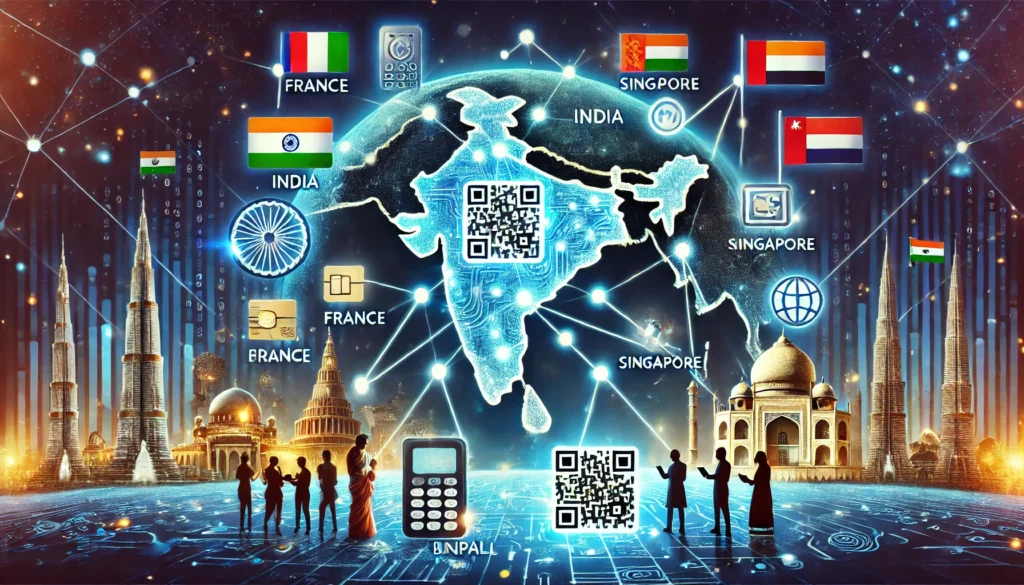
Overview of India’s Digital Payments Landscape
India’s digital payments ecosystem has witnessed remarkable growth and innovation in recent years, positioning the country as a global leader in financial technology. The introduction of the Unified Payments Interface (UPI) in 2016 marked a significant milestone in this transformation, allowing users to transfer money seamlessly between bank accounts in real-time. UPI’s user-friendly interface, coupled with its interoperability among banks, has encouraged widespread adoption among consumers and small businesses alike.
In addition to UPI, RuPay has emerged as a critical player in the digital payments landscape. As India’s first domestic card payment network, RuPay supports various transactions and promotes financial inclusion by offering lower transaction fees compared to international networks. The integration of RuPay with UPI further strengthens its role, enabling users to make secure payments through various channels such as mobile wallets and point-of-sale terminals.
The surge in digital payments can be attributed to several technological advancements, including the rapid proliferation of smartphones and internet connectivity. With India boasting one of the largest populations of smartphone users globally, the accessibility of digital payment platforms has significantly increased. Government initiatives aimed at promoting cashless transactions, such as the Digital India campaign, have also played a pivotal role in enhancing consumer trust and encouraging the adoption of digital payment methods.
As a result of these developments, a considerable proportion of the Indian population has embraced digital payments, leading to a shift in financial habits. Consumers, who once relied heavily on cash transactions, are now opting for mobile payments and online transactions, contributing to a more efficient and transparent financial system. Businesses, too, have reaped the benefits of adopting digital payment solutions, experiencing improved cash flow management and reduced incidents of fraud. Overall, the digital payments landscape in India continues to evolve, driven by innovation, consumer preferences, and supportive policies.
UPI’s International Expansion: Key Markets and Significance
The Unified Payments Interface (UPI) has emerged as a transformative payment system, empowering millions of users in India. Its expansion into international markets signifies a vital step towards bolstering India’s digital economy while also offering ease of transaction for Indian travelers and businesses abroad. Key markets that have embraced UPI include the United Arab Emirates (UAE), Singapore, Bhutan, Nepal, Sri Lanka, France, and Mauritius. Each of these markets presents unique opportunities and challenges for Indian enterprises and tourists.
The UAE serves as a crucial hub for Indian expatriates, and the introduction of UPI has facilitated seamless money transfers and transactions for over 3 million Indian nationals residing there. Similarly, Singapore has recognized its potential, fostering a conducive environment for digital payments that aligns with UPI’s capabilities. In countries like Bhutan and Nepal, UPI’s integration reflects a shared interest in advancing regional digital payment infrastructure, thereby enhancing cross-border trade and tourism.
The recent launch of UPI in France marks a significant milestone as its first entry into Europe. This development not only underscores UPI’s international aspirations but also illustrates France’s commitment to embrace innovative payment technologies. This expansion allows Indian consumers to transact effortlessly, from shopping to dining, fostering closer ties between India and Europe. With the potential for further integrations in major retail and service sectors, UPI can significantly enhance the experience of Indian travelers.
Overall, UPI’s international expansion is not just a strategic move for Indian digital payments but also an important step towards fostering a global interconnected economy. As more countries adopt UPI, Indian businesses and consumers will benefit from increased efficiency and convenience, paving the way for a more inclusive digital future.
The Role of Government Initiatives and BRICS Collaboration
The expansion of digital payment systems such as the Unified Payments Interface (UPI) and RuPay has been significantly bolstered by targeted government initiatives, primarily under the leadership of Prime Minister Narendra Modi. The Indian government has strongly advocated for the incorporation of UPI into the financial ecosystems of BRICS nations, including Brazil, Russia, China, and South Africa. This effort aims to enhance remittance flows and, in turn, stimulate economic growth within these member countries.
Government initiatives focusing on promoting digital payments highlight the potential of UPI, which offers a robust framework for fast, secure, and efficient money transfers. India’s proactive participation in international cooperation forums such as BRICS presents opportunities to engage with new member states, allowing for the sharing of experiences and the adaptation of UPI to diverse economic contexts. This collaboration not only emphasizes financial inclusion but also strengthens ties among BRICS nations, ultimately contributing to a more integrated global financial landscape.
As the BRICS grouping evolves by welcoming new member nations, the integration of Indian digital payment systems is increasingly advantageous. Other countries can benefit from UPI’s infrastructure, which effectively addresses barriers to financial access. Moreover, the collaborative framework established through BRICS can pave the way for more seamless cross-border transactions, making digital payments more accessible to various demographics, particularly in regions traditionally underserved by conventional banking systems.
Furthermore, advancing UPI’s global outreach could positively influence India’s geopolitical standing. By exporting its digital payment technologies and frameworks, India aims to emerge as a leader in financial innovation, enhancing its image as a reliable partner in multilateral financial cooperation. Thus, the confluence of government initiatives and BRICS collaboration presents a transformative potential for reinforcing India’s role within the global digital payments ecosystem.
The Future of Digital Payments in India and Beyond
The landscape of digital payments is rapidly evolving, with India at the forefront of this technological revolution. The Unified Payments Interface (UPI) and RuPay are not only transforming domestic transactions but are also poised for significant international expansion. According to the ACI Worldwide report 2024, India is leading the charge in real-time payment transactions, setting the stage for an enhanced global financial ecosystem. With increasing smartphone penetration and a growing internet user base, the infrastructure supporting digital payments is becoming more robust, facilitating seamless and secure transactions.
Emerging trends in digital payments indicate a shift towards integrated payment solutions that enhance user experience. The rise of contactless payments and advancements in biometric authentication methods are likely to gain traction, ensuring both convenience and security for consumers. Additionally, the integration of artificial intelligence and blockchain technology is anticipated to revolutionize transaction processes, providing added layers of security and transparency. As UPI continues to innovate and expand its capabilities, it offers a blueprint for other nations attempting to implement similar systems.
Moreover, UPI’s commitment to financial inclusion has profound implications for economic empowerment, especially in underserved regions. By enabling micro and small enterprises to transact digitally, UPI helps break down barriers to access financial services, thus fostering entrepreneurial growth. As a result, India’s digital payments ecosystem not only serves its citizens but also establishes the country as a global leader in promoting inclusive and sustainable economic development.
Furthermore, the international recognition of UPI and RuPay underscores India’s emerging role in shaping the future of digital finance. By expanding their footprint in various global markets, these platforms are setting new benchmarks for interoperability and cross-border transactions. This strategic expansion positions India as a pivotal player in the global digital payments landscape, influencing best practices and regulatory frameworks worldwide.